TB-500 Is Seven Amino Acids. The Research It Borrows Is About the Whole Protein.
A new scoping review mapped 80 studies on thymosin beta-4 and TB-500, and exactly one of them studied TB-500 directly. Here's what that does to every claim on the market.
"TB-500 is just thymosin beta-4 with a shorter name."
I hear that sentence constantly, from buyers, from coaches, from affiliates writing copy about a product I sell. It gets repeated like a rumor at a family reunion: confidently, by people three tellings removed from anybody who actually saw the thing.
A scoping review indexed recently mapped the literature on thymosin beta-4 and TB-500 in tissue healing, regeneration and musculoskeletal repair. Eighty studies made it in. One of them evaluated TB-500 directly.
That's the article. But let me show the work, because the gap between those two numbers is where most of this market lives.
What is actually in the vial
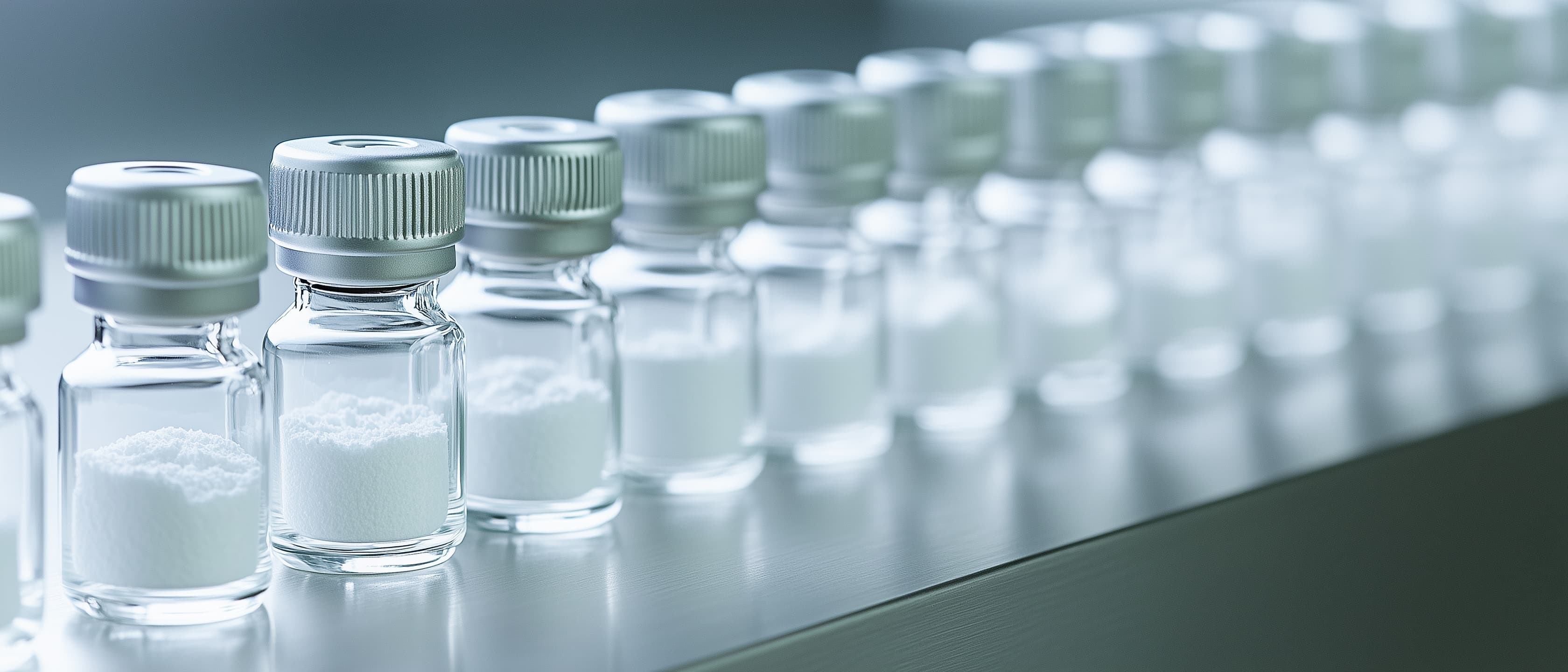
Our standalone listing spells it out: TB-500 is an acetylated seven-amino-acid synthetic peptide, Ac-LKKTETQ, corresponding to residues 17-23 of thymosin beta-4.
Seven residues. Out of a protein.
So they are not two names for one compound. One is a short piece of the other, made synthetically, sold under a nickname that has been doing the reputational work of the full protein for years. TB-500's standing in this industry is a loan taken out against thymosin beta-4's research record, and nobody has been asked for collateral.
That does not mean the fragment is inert. It means the citation and the label refer to different molecules, and the literature has not closed the distance between them. I'm not going to tell you they're pharmacologically equivalent. I'm also not going to tell you they're definitively not. The honest answer is that the mapped literature does not settle it, and anyone who tells you otherwise is filling a silence with confidence.
What the review did, and what it can't do
The authors searched PubMed, Europe PMC and ClinicalTrials.gov through March 2026, screened 1,772 records, and included 80 studies evaluating thymosin beta-4, TB-500, or related derivatives in repair-related contexts.
Understand what kind of document that is. A scoping review maps literature. It describes what exists, in what tissues, in what model systems, under what name. It does not pool effect sizes and it does not grade study quality. It cannot tell you whether something works. It tells you where the evidence lives.
Which is exactly what this argument needed. The TB-500 dispute was never really about effect size. It was about which name the evidence belonged to, and until now the answer came from forum memory.
What the map shows
Three things, and they all point the same direction.
First: the included literature was weighted toward mixed and in vitro study designs. Cells and dishes, heavily represented.
Second: most of the studies evaluated TB4, the full-length protein, rather than TB-500. Direct TB-500 evidence was limited to a single included study.
Third, and this is the one that should sting: the mapped studies clustered in wound/skin/soft tissue, vascular/endothelial, ocular/cornea and bone. The categories people actually buy this compound for, tendon, ligament, muscle, cartilage, spine and intervertebral disc, were comparatively sparse. Human evidence was concentrated in ocular/cornea and wound/skin/soft tissue settings.
So the thickest part of the map is eyes and skin. The thinnest part is tendons.
The irony is almost too neat. An entire repair-peptide market built on shoulders and hamstrings and Achilles tendons, resting on a literature whose human work is mostly about corneas and wounds, mostly about a different molecule than the one in the vial.
The Fragment Gap, four checks
This is the lens I run every repair-peptide claim through now. Four questions, in order.
- Which molecule was studied, the full protein or the seven-residue fragment? If the paper says thymosin beta-4 and the vial says TB-500, you've crossed a gap.
- Which system, cell culture, animal, or human? In this mapped literature, the answer skews hard toward the first two.
- Which endpoint, histology, mechanics, or function? Nicer-looking tissue under a microscope is not a tendon that holds load, and it is not a person who went back to work.
- Which name is on the vial, and does it match the citation being used to sell it?
Most TB-500 marketing fails check one and check four simultaneously, then never gets asked about two and three.
Where my own catalog stands
I'll go first, because I'd rather say this than have somebody else say it.
Our standalone TB-500 10mg listing is named TB-500 10mg (Thymosin Beta-4 Fragment), states ≥99% purity on the page, and has a COA attached. That descriptor is deliberate and it stays. We will not label a fragment as full-length thymosin beta-4 anywhere in the catalog, at any price.
Now the part I don't enjoy. Of the four TB-500-containing SKUs I'm discussing here, three have a COA attached and one does not, the BPC-157 10mg / GHK-Cu 50mg / TB-500 10mg 70mg blend. And only the standalone prints a purity figure on the listing page; the blends' certificates report one, the pages don't. If I'm going to stand here telling you a document beats a nickname, I have to admit I currently ship a listing without one attached. Our catalog is being audited against exactly the four checks above.
One more, since I sell the pairing: nothing in this mapped literature gives me a combination claim for BPC-157 with TB-500. So I'm not making one. It's a blend because buyers want a blend.
What to do with this
Before you accept any TB-500 claim, mine, a competitor's, a coach's, ask which of the two names the underlying study used. If the citation says thymosin beta-4 and the vial says TB-500, the claim has crossed a gap the literature has not closed. Say so out loud. You'll be right more often than the person selling.
And if you see a product labeled plainly "thymosin beta-4" priced like a fragment, that isn't a bargain. That's a labeling question.
See how we label ours: the TB-500 10mg listing says Thymosin Beta-4 Fragment, and the COA is attached to the page. Check the document, not the nickname.
A compound's reputation and a compound's evidence can belong to two different molecules, and the market will never point that out for you, the name on the vial is marketing, the name in the citation is the claim. When those two names don't match, you are not reading research, you are reading a loan. Ask which one you're holding before you extrapolate anything.
Claims this piece draws on, by the strength of the research behind each one. Ordered strongest to weakest. Community discussion is shown separately because it indicates interest, not evidence.
Question everything. Including me.
Discussion
In the forum →This is the discussion for the audit above. If the piece missed a study, over-read one, or graded a claim higher than the paper supports, say so here — a reply that cites its source gets read first.